Is a screen bad for a toddler's sleep? What SlumberPal does about it
The NHS advice is clear and we repeat it: “Dim the lights and switch off devices such as the TV, games consoles, computers, and tablets 1 hour before bedtime.” SlumberPal is built so the tablet in the bedroom is not that kind of screen. This page says exactly what it shows and what it does not claim.
What the night scene is
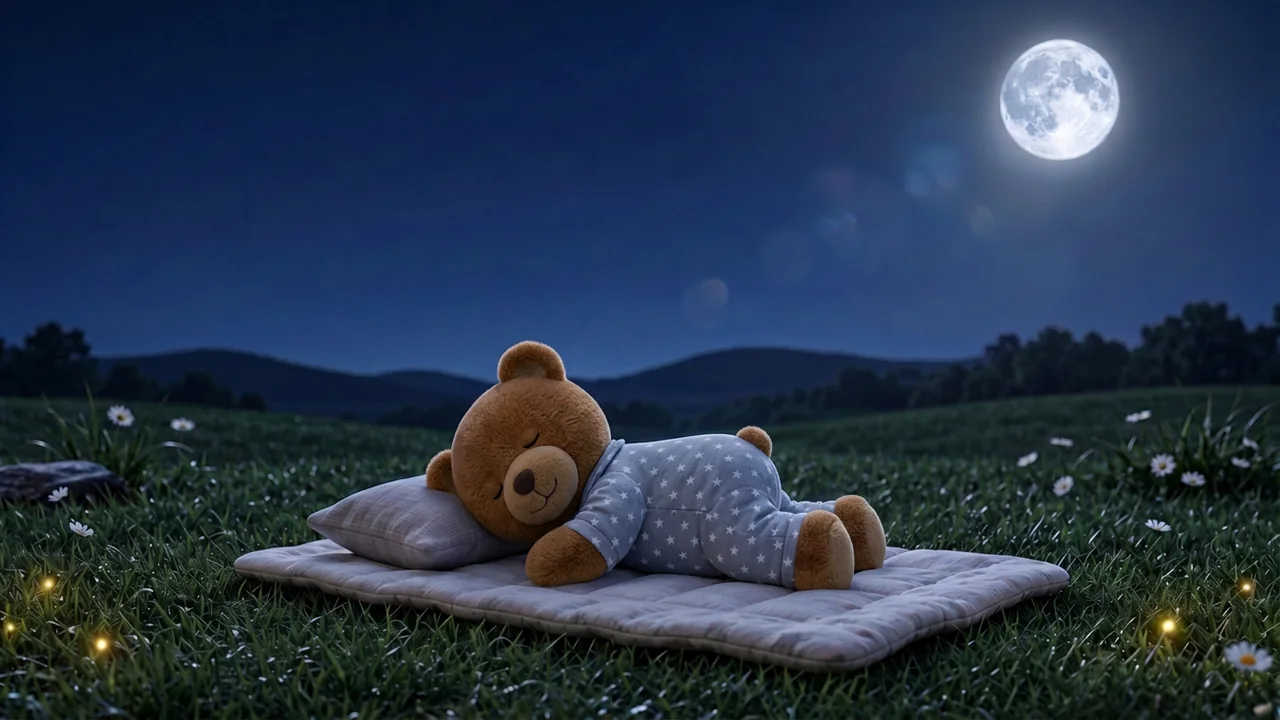
- Dark and still. At bedtime the screen shows the pal asleep under six stars on a night sky. The scene is a still picture; nothing moves except a star going out, and that is a slow fade.
- Dim. The brightness sits on the quick bar behind the grown-up PIN, and you set it. Set it low and keep the tablet across the room.
- Quiet. Sounds start quiet and never play above a volume cap that you can lower.
- Nothing to do. There are no games, no videos and no buttons that lead anywhere. A child-sized information panel is the only thing that opens without the PIN, and it is dim and silent at night.

What it is not
It is not a cartoon, a story app or a video player, and it is not a reason to have the tablet in bed. Activities such as brushing teeth are short animations of the pal, played before bed or in the day, not during a sleep.
What SlumberPal does not claim
SlumberPal does not claim to help children sleep, to be good for their eyes, or to change how their body prepares for sleep. It does not claim that the screen is as good as no screen. It is a sleep clock: it shows a child when it is time to sleep and when it is OK to get up, in a way a two-year-old can read. If you would rather have no screen in the bedroom, a Groclock-style clock does the clock part, and here is an honest comparison.
What the experts say about routines
The same NHS page says: “Make sure you are consistent with bedtimes and naptime.” The Sleep Charity, which the NHS points to for children’s sleep advice, says: “Dim the lights in the hour before bed to create a relaxing environment.” SlumberPal’s part in that is the consistency: the same stars, the same sun, the same times, set once from your phone.
Sources: Sleep routines for toddlers and children, Cambridgeshire and Peterborough NHS (https://cambspborochildrenshealth.nhs.uk/sleep/healthy-sleep-routines/sleep-routines-for-toddlers-and-children/); Relaxation tips, The Sleep Charity (https://thesleepcharity.org.uk/information-support/children/relaxation-tips/).
Questions
Does the screen stay on all night?
Yes, dimmed, showing the still night scene, so the stars and the sun are there whenever your child looks.
Can I turn the sound off?
Yes. Silence is one of the sounds, and the cap applies to every sleep.
Is there anything my child can tap?
At night, only the padlock, which asks for the grown-up PIN, and the small information panel. Nothing else responds.
What does “still” mean?
The sleep scene is a fixed picture. The only change on it is a star fading out, and the sunrise in the morning, which steps gently rather than animating.
Where should the tablet go?
Across the room, plugged in, out of reach, with Android screen pinning on. See using a tablet as a sleep clock.